Sleep
Sleep on schedule. It counts more than you think.
Seven hours is the number everyone knows. The research on when you sleep — and what you look at before you do — is just as interesting.
By Mana5 min read
Aim for seven or more hours — and keep your bedtime and wake time consistent. In a large study, how regularly people slept predicted mortality risk better than how long they slept.
How much is enough
In 2015, the American Academy of Sleep Medicine and the Sleep Research Society published a joint consensus recommendation: adults should sleep seven or more hours a night, on a regular basis, to promote optimal health.
The US Centers for Disease Control and Prevention give the same guidance — seven or more hours for adults aged 18 to 60, and seven to nine hours from 61 to 64.[1][2]
Regularity is its own signal
Duration isn’t the whole story. A 2024 study in the journal SLEEP used more than 10 million hours of wrist-worn accelerometer data from about 61,000 UK Biobank participants to score how consistent their sleep and wake times were from day to day.
Compared with the least regular sleepers, people in the more regular groups had a 20–48% lower risk of death from any cause over the follow-up period — and sleep regularity was a stronger predictor of all-cause mortality than sleep duration. It’s an association, not proof of cause, but it’s a striking one. The CDC’s first suggestion for better sleep is simple: go to bed and get up at the same time every day.[3][2]
Sleep · this week
7h 55mavg
In bed ±12 min, night after night
The glow problem
Screens matter too. In a controlled study published in PNAS, people who read on a light-emitting eReader in the hours before bed took longer to fall asleep than when they read a printed book. They also had less melatonin, a later-running body clock and were less alert the next morning.
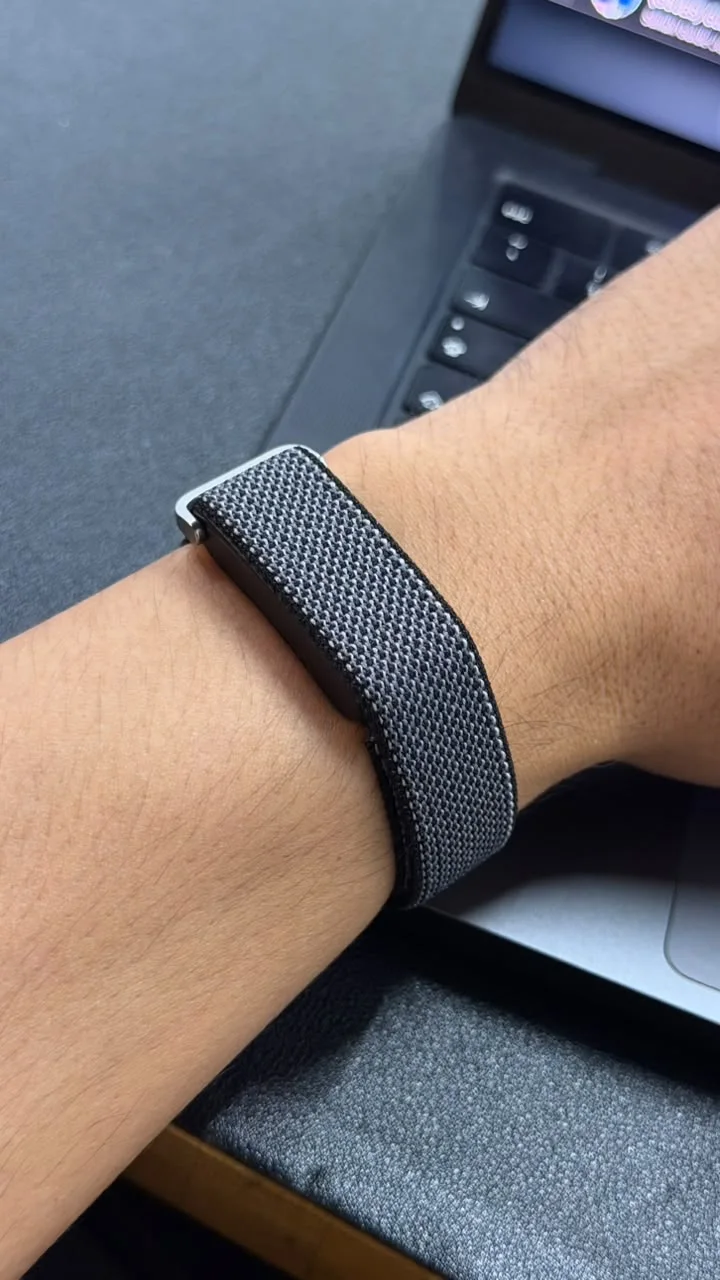
The CDC suggests turning off electronic devices at least 30 minutes before bedtime. It’s one of the reasons Mana has no screen at all: nothing on your wrist lights up at night, and nothing asks you to check it.[4][2]
What a band can — and can’t — tell you
Consumer wearables now capture heart rate and its variability, temperature and movement around the clock. Researchers reviewing them see real promise for understanding sleep, but also real limits: proprietary algorithms, firmware updates and uneven validation mean their output should be read with care.
So Mana leans on what a band measures well — when you fell asleep, when you woke, and how consistent that is across the week — and presents finer estimates, like sleep stages, as estimates. A regular schedule is something you can see, and something you can change.[5]
References
The sources behind the figures in this article. Interpretation and advice are our own.
- 1Watson NF, Badr MS, Belenky G, et al. Recommended Amount of Sleep for a Healthy Adult: A Joint Consensus Statement of the American Academy of Sleep Medicine and Sleep Research Society. SLEEP, 2015; 38(6): 843–844. Read source
- 2Centers for Disease Control and Prevention. About Sleep. CDC, 2024. Read source
- 3Windred DP, Burns AC, Lane JM, et al. Sleep regularity is a stronger predictor of mortality risk than sleep duration: A prospective cohort study. SLEEP, 2024; 47(1): zsad253. Read source
- 4Chang AM, Aeschbach D, Duffy JF, Czeisler CA. Evening use of light-emitting eReaders negatively affects sleep, circadian timing, and next-morning alertness. Proceedings of the National Academy of Sciences, 2015; 112(4): 1232–1237. Read source
- 5de Zambotti M, Cellini N, Goldstone A, et al. Wearable Sleep Technology in Clinical and Research Settings. Medicine & Science in Sports & Exercise, 2019; 51(7): 1538–1557. Read source
General information, not medical advice. Mana is in development and isn’t intended to diagnose, treat or prevent any condition. If you’re concerned about your health, talk to a doctor.